Evaluating the Weekly Habit Tracker KDP Interior for Low-Content Publishing
The low-content publishing market on Amazon has matured significantly, moving beyond simple lined journals to specialized functional tools. Among these, the Weekly Habit Tracker KDP Interior has emerged as a staple asset for publishers targeting the self-improvement and productivity niches. Unlike generic notebooks, this specific interior type serves a distinct behavioral purpose, requiring a balance of aesthetic appeal and functional utility. For creators, freelancers, and small business owners operating in the digital product space, understanding the nuances of this asset is critical for distinguishing a viable product from market saturation.
A high-quality Weekly Habit Tracker KDP Interior is not merely a grid; it is a structured framework designed to facilitate behavior change through visual feedback. When evaluating these interiors for commercial use or personal projects, one must assess them based on usability, print optimization, and audience alignment rather than visual novelty alone. The value proposition lies in how effectively the layout supports the user's daily routine without creating friction during the printing or binding process.
Functional Design and Layout Architecture
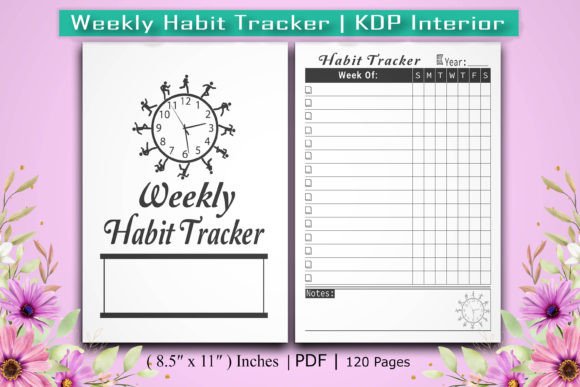
The primary differentiator between a successful habit tracker and a failed one is the architectural logic of the page. A practical Weekly Habit Tracker KDP Interior typically allocates space for seven days across a horizontal or vertical axis, accompanied by a dedicated column for habit identification. However, professional evaluation requires looking deeper at spacing and hierarchy.
- Writing Space Adequacy: Many mass-produced interiors fail by providing insufficient line height. For adult users, a minimum line spacing of 0.25 inches to 0.3 inches is necessary to accommodate standard handwriting without cramping. Interiors that prioritize fitting more habits per page often sacrifice write-ability, rendering the book frustrating to use.
- Checkbox vs. Fill-In Design: Effective trackers utilize clear checkboxes or circular indicators rather than open lines. This reduces cognitive load and provides immediate visual satisfaction upon completion. The best interiors use vector-based graphics for these elements to ensure crisp printing at any trim size.
- Marginal Safety Zones: KDP printing tolerances vary. A reliable interior maintains a generous inner gutter margin (typically 0.75 inches or more for books over 100 pages) to prevent content from being swallowed by the binding. Publishers must verify that the weekly grids do not encroach on this safety zone, as this is a common cause of negative reviews regarding usability.
From a production standpoint, the file format matters as much as the design. PDF files with embedded fonts and outlined vectors are non-negotiable. Rasterized images or flattened JPEGs often result in pixelation when printed on KDP’s standard paper stock, diminishing the perceived value of the final product.
Audience Alignment and Niche Specificity
While "habit tracking" is a broad category, the Weekly Habit Tracker KDP Interior performs best when tailored to specific sub-demographics. Professionals aged 20–50 generally seek efficiency and minimalism, whereas other demographics may prefer decorative elements. Understanding this distinction prevents the creation of generic products that appeal to no one.
For entrepreneurs and marketers, the ideal interior integrates habit tracking with broader productivity metrics. These users often benefit from layouts that include sections for weekly focus, top three priorities, or end-of-week reflection prompts alongside the standard tracking grid. This transforms the book from a passive log into an active management tool. Conversely, educators or serious hobbyists might prefer a cleaner, distraction-free interface that focuses solely on consistency without additional planning elements.
Publishers should also consider the psychological aspect of the target audience. Some users find dense grids intimidating, leading to abandonment after two weeks. Interiors that incorporate whitespace, motivational micro-copy, or flexible "skip day" mechanisms tend to have higher long-term retention rates. Evaluating an interior involves asking whether the design encourages sustainable usage or demands perfectionism that leads to burnout.
Print Quality Considerations and Paper Limitations
Amazon KDP uses standard cream or white paper that is relatively thin (approximately 55# to 60# text weight). This physical constraint dictates what constitutes a viable Weekly Habit Tracker KDP Interior. Designs that rely heavily on solid black backgrounds, dark shading, or complex grayscale gradients are prone to bleed-through and ghosting.
Professional creators mitigate this by adhering to high-contrast, line-art aesthetics. Thin, clean lines print consistently across different manufacturing facilities, whereas heavy ink coverage can cause paper warping. When sourcing or designing interiors, test prints are essential. A digital proof on a backlit screen does not accurately represent how toner sits on uncoated paper. If an interior looks muddy or dark in digital preview, it will likely be unusable in physical form.
Furthermore, consistency across the manuscript is vital. A 120-page book should not have shifting margins or alternating grid sizes unless intentional. Automated generation tools sometimes introduce slight variances that become obvious when flipping through the physical book. Manual quality assurance ensures that every weekly spread aligns perfectly, maintaining the professional standard expected by paying customers.
Commercial Viability and Market Differentiation
For publishers and side-hustlers, the Weekly Habit Tracker KDP Interior represents a scalable asset, but only if approached strategically. The barrier to entry is low, meaning competition is high. Success depends on bundling the interior with unique value propositions rather than competing solely on price or cover design.
Differentiation strategies include:
- Hybrid Functionality: Combining the weekly tracker with complementary content such as meal planning, water intake logs, gratitude journaling, or project milestone tracking. This increases the utility-per-page ratio and justifies a higher price point.
- Instructional Front Matter: Including a guide on habit formation science, examples of effective tracking, or customization tips adds intellectual value. It signals to the buyer that the publisher understands the problem they are solving, not just the format.
- Size Optimization: While 6x9 is the industry standard, exploring alternative trim sizes like 7x10 or 8.5x11 can capture underserved segments. Larger formats appeal to desk-bound professionals who want expansive writing space, while smaller pocket sizes suit commuters.
It is important to manage expectations regarding revenue. A single interior template rarely generates significant income in isolation. Sustainable results come from iterating on designs based on customer feedback, expanding into related niches, and building a brand portfolio. The interior is the foundation, but marketing, keyword research, and cover design determine visibility.
Practical Limitations and User Experience Risks
Despite their popularity, Weekly Habit Tracker KDP Interiors have inherent limitations that creators must acknowledge. The fixed nature of print means users cannot undo mistakes or adjust layouts mid-stream. Digital apps offer flexibility that paper cannot match, so the analog experience must offer tangible benefits like reduced screen time and tactile engagement.
Another risk is the "Monday start" bias. Many pre-made interiors assume a traditional workweek, alienating shift workers, freelancers with fluid schedules, or international audiences where weeks begin on Sunday. Offering undated versions or multiple start-day variants addresses this gap and expands the potential customer base.
Additionally, excessive structure can backfire. Some users abandon trackers because the layout forces them to track metrics they no longer care about. Interiors that provide blank rows or customizable categories respect user autonomy and adapt to changing goals. Rigidity is often the enemy of long-term adherence in habit formation.
Making an Informed Selection
Whether you are a publisher sourcing assets or a professional seeking a personal tool, evaluating a Weekly Habit Tracker KDP Interior requires a critical eye. Look beyond the thumbnail image. Examine sample pages for margin integrity, line weight, and logical flow. Consider the paper reality of KDP printing and the specific needs of your intended user.
For creators, the goal should be to produce resources that genuinely assist people in building better routines. Quality interiors that respect both the manufacturing constraints and the human element of habit formation stand the test of time. In a marketplace flooded with mediocrity, thoughtful design and practical empathy are the ultimate competitive advantages. By prioritizing function over decoration and specificity over generality, the Weekly Habit Tracker KDP Interior remains a relevant and valuable component of the low-content publishing ecosystem.