The Timeless Appeal of Watercolor Hydrangea Seamless Patterns in Modern Design
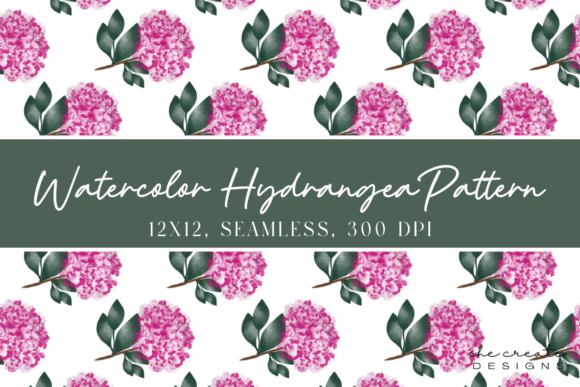
There is a distinct softness to botanical illustration that digital vectors often struggle to replicate. When designers and crafters search for floral assets, they are frequently looking for more than just a picture of a flower; they are seeking texture, emotion, and organic imperfection. This is precisely where the watercolor hydrangea seamless pattern excels. Unlike rigid geometric prints or flat vector florals, these patterns carry the bleeding edges, pigment pooling, and paper grain inherent to traditional painting. The hydrangea itself, with its clustered blooms and lush foliage, offers a natural density that makes it uniquely suited for repeating surface design.
Incorporating this specific aesthetic into creative projects requires an understanding of both the artistic medium and the technical requirements of seamless repetition. Whether you are designing wedding stationery, creating textile prints for fashion, or building digital backgrounds for web use, the interplay between the delicate watercolor style and the structural necessity of a seamless tile defines the success of the final product.
Why Hydrangeas Translate Perfectly to Repeat Patterns
Not all flowers are created equal when it comes to surface pattern design. While roses and peonies are popular, their distinct, centralized shapes can sometimes create unintended focal points or "grid lines" in a repeating layout. Hydrangeas behave differently. Their spherical, bushy structure acts as a natural filler. In a watercolor hydrangea seamless pattern, the blooms often overlap and merge visually, creating a continuous field of color rather than isolated motifs floating in white space.
This characteristic is vital for achieving a true seamless effect. The irregular edges of watercolor petals allow one cluster to bleed softly into the next without harsh boundaries. From a practical standpoint, this makes hydrangeas incredibly forgiving during the editing process. If a designer needs to adjust the spacing or scale, the organic nature of the painted clusters hides minor alignment issues that would be glaringly obvious with sharper, more symmetrical botanical subjects.
Color Versatility and Seasonal Adaptability
One of the most significant advantages of choosing this motif is its chameleon-like color palette. Hydrangeas naturally shift between blues, pinks, purples, and greens based on soil pH, and this biological trait translates beautifully into design versatility. A single watercolor hydrangea seamless pattern can be recolored or selected in specific hues to match vastly different seasonal themes.
- Spring and Summer: Soft blues, lavenders, and fresh greens evoke garden parties, bridal showers, and light apparel.
- Autumn and Winter: Deeper burgundies, dusty roses, and muted sage greens transition the same pattern into cozy home decor, holiday packaging, and fall fashion textiles.
- Vintage and Antique: Desaturated, sepia-toned variations lend themselves to heritage branding, tea packaging, and nostalgic book covers.
This adaptability means that investing in high-quality hydrangea assets provides long-term utility across multiple product lines and seasons, maximizing the return on creative resources.
Technical Considerations for Seamless Integration
While the aesthetic is romantic and loose, the technical execution of a watercolor hydrangea seamless pattern must be precise. Users downloading or purchasing these assets should always verify the tiling method. True seamless patterns are engineered so that elements crossing the right edge continue perfectly on the left, and elements on the bottom align with the top. With watercolor, this is complicated by transparency and texture.
A common pitfall in lower-quality files is visible scarring at the seam lines. Because watercolor relies on wet-on-wet blending, a hard cut-and-paste seam looks artificial. High-quality patterns utilize masking techniques or mirrored cloning to ensure the paint strokes flow uninterrupted across the tile boundary. When evaluating a pattern for professional use, zoom in to 100% and check the intersections. The paper texture should also remain consistent; if the grain shifts abruptly at the seam, it breaks the illusion of a hand-painted surface.
Resolution and File Formats for Different Workflows
The intended application dictates the necessary file specifications. For print-on-demand products like phone cases or mugs, a raster-based watercolor hydrangea seamless pattern at 300 DPI is typically sufficient. However, for large-format printing such as wallpaper or upholstery, resolution becomes critical. Scaling up a standard raster file will result in pixelation that destroys the delicate watercolor effect.
For scalable applications, vectorized watercolor files or ultra-high-resolution TIFFs (often 600 DPI or higher) are preferable. Some modern workflows utilize AI upscaling tools to enhance older or smaller pattern files, but caution is advised. These tools can sometimes smooth out the authentic paper grain that gives watercolor its charm. Always test print a swatch before committing to a full production run to ensure the tactile quality of the paint remains intact.
Practical Applications Across Industries
The utility of these patterns extends far beyond simple background fills. Understanding how industry professionals leverage this asset reveals its true value proposition.
Stationery and Event Design
In the wedding and events sector, the watercolor hydrangea seamless pattern serves as a foundational branding element. It is rarely used as a solid block of color. Instead, designers utilize opacity masks to fade the pattern into solid colors, creating elegant borders for invitations, menu cards, and seating charts. The pattern also functions excellently as envelope liner art or tissue paper wrapping for gift bags. Because hydrangeas symbolize gratitude and heartfelt emotion, they carry semantic weight that enhances the guest experience beyond mere decoration.
Textile and Fashion Design
Fashion designers favor this motif for its ability to drape well visually. Unlike bold graphic prints that can distort unflatteringly over body curves, the dispersed, mid-scale nature of hydrangea clusters creates a flattering visual rhythm. When applied to silk scarves, summer dresses, or linen blouses, the watercolor texture mimics the behavior of dye on fabric, making the print feel integrated rather than stamped on. For quilters and sewists, these patterns are often printed on cotton fat quarters, where the seamless repeat allows for continuous yardage without jarring breaks in the floral arrangement.
Digital Content and Web Design
Web designers utilize these patterns to add warmth to otherwise sterile digital interfaces. A subtle, low-opacity watercolor hydrangea seamless pattern can serve as a site-wide background texture that reduces eye strain compared to pure white. It is particularly effective in wellness, beauty, and lifestyle niches where the brand voice aims to be nurturing and organic. In social media content creation, these patterns provide instant cohesion for Instagram carousel posts or Pinterest pins, establishing visual recognition without requiring complex custom illustration for every piece of content.
Selecting the Right Pattern for Your Project
With thousands of options available, narrowing down the perfect watercolor hydrangea seamless pattern requires assessing three key factors: scale, density, and negative space.
Scale refers to the size of the individual blooms relative to the canvas. Large-scale patterns make bold statements suitable for drapery or feature walls but can overwhelm small items like business cards or jewelry boxes. Conversely, micro-patterns offer exquisite detail for stationery but may turn into visual noise when viewed from a distance on larger surfaces.
Density determines the visual weight. A dense pattern with minimal background showing creates a rich, immersive look ideal for packaging wraps. A sparse pattern with ample breathing room feels airy and modern, better suited for minimalist web headers or light textile prints.
Negative Space is perhaps the most overlooked factor. If you plan to overlay text, logos, or product photography, you need a pattern with intentional open areas. Some watercolor hydrangea designs include coordinated solid-color companion files or built-in clear zones specifically to accommodate typography. Choosing a pattern with functional negative space saves hours of post-processing time trying to mask out busy areas for readability.
Licensing and Commercial Usage Rights
Before integrating any watercolor hydrangea seamless pattern into a commercial workflow, verifying licensing terms is non-negotiable. Personal use licenses do not cover products intended for sale. Even within commercial licenses, distinctions exist between "small business" tiers and "extended" or "enterprise" licenses for mass production.
Pay special attention to restrictions regarding digital redistribution. Most licenses prohibit selling the pattern file itself or including it in digital kits where the end user could extract the raw asset. However, using the pattern as part of a flattened, finished design (like a printed planner or a sewn garment) is generally permitted. Always document your license purchase and keep records accessible. As marketplaces evolve and artists update their terms, having proof of compliance protects your business from future copyright disputes.
Ultimately, the enduring popularity of the watercolor hydrangea seamless pattern lies in its unique intersection of technical utility and emotional resonance. It solves practical design problems—filling space, providing texture, offering color variety—while simultaneously delivering the handcrafted authenticity that modern consumers crave. By understanding the botanical characteristics, technical specifications, and appropriate applications, creatives can leverage this timeless motif to produce work that feels both professionally polished and genuinely human.