Evaluating Onam Festival Black Silhouette Art: A Practical Guide to Style, Application, and Alternatives
Onam Festival black silhouette art represents a specific intersection of cultural heritage and modern minimalist design. Unlike traditional Kerala mural paintings or detailed vector illustrations that rely on vibrant color palettes and intricate line work, silhouette art reduces the festival’s iconography to pure shape and negative space. For designers, event organizers, and content creators, this style offers distinct advantages in versatility and reproduction, but it also presents unique challenges regarding cultural accuracy and emotional resonance. Understanding when to utilize this aesthetic requires comparing it against other available visual resources and evaluating its fit for specific project goals.
Defining the Aesthetic and Cultural Specificity
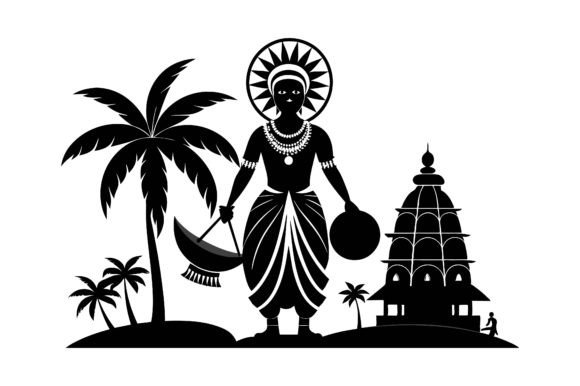
At its core, Onam Festival black silhouette art focuses on the recognizable outlines of key cultural symbols. Common motifs include the mahabali figure holding an umbrella, the tiered structure of a kathakali headgear, the curved hull of a vallamkali (snake boat), or the radial symmetry of a pookkalam (flower carpet). The distinction lies in the removal of internal detail. Facial expressions, fabric textures, and floral gradients are eliminated, leaving only the external contour.
This reductionist approach serves a functional purpose. By stripping away color and texture, the artwork becomes culturally specific yet visually neutral enough to integrate into diverse design systems. However, this abstraction demands high precision. In silhouette art, a slight deviation in the curve of a temple roof or the posture of a dancer can render the image unrecognizable or culturally inaccurate. When evaluating assets in this category, prioritize those created by artists with demonstrated knowledge of Kerala’s traditions over generic tropical or Indian-themed clip art. Authenticity in the outline is the primary value proposition of this style.
Comparing Silhouette Art to Detailed Illustration and Photography
When selecting visuals for Onam-related projects, stakeholders typically choose between three categories: black silhouettes, full-color digital illustrations, and photography. Each serves different strategic needs.
Visual Hierarchy and Background Integration
Black silhouettes excel in complex layouts where text legibility is paramount. Because they lack internal contrast and color competition, they function similarly to typography. They can be placed behind headlines, used as watermarks, or integrated into patterned backgrounds without reducing readability. In contrast, detailed illustrations and photographs often require dedicated white space or overlay treatments to accommodate copy. If your primary goal is information delivery rather than visual storytelling, Onam Festival black silhouette art is frequently the superior choice for maintaining a clean user interface or print layout.
Reproduction and Scalability
For physical applications such as merchandise, signage, or laser cutting, silhouettes offer significant practical benefits. Single-color vector silhouettes are infinitely scalable and cost-effective to produce. They eliminate registration issues associated with multi-color printing and translate perfectly to vinyl cutting or embroidery. Detailed illustrations may lose fidelity when scaled down for business cards or social media avatars, while photographs can become pixelated or muddy in low-resolution formats. If the project involves variable sizing across digital and physical touchpoints, the technical flexibility of silhouette art reduces production friction.
Emotional Resonance and Narrative Depth
The tradeoff for this technical efficiency is emotional specificity. Color and facial expression carry significant cultural weight in Onam celebrations. The gold of a kasavu saree, the green of banana leaves, and the specific makeup of a kathakali performer evoke nostalgia and sensory memory. Black silhouettes, by definition, cannot convey these elements. They represent the idea of Onam rather than the experience of it. For campaigns focused on heritage preservation, culinary tourism, or emotional connection, relying solely on silhouettes may feel sterile. In these cases, silhouettes work best as supporting graphical elements alongside richer photographic or illustrative content.
Evaluating Formats: Vector vs. Raster Assets
Not all Onam Festival black silhouette art is created equal. The file format dictates the asset's long-term utility and should be a primary factor in procurement decisions.
- Vector Formats (SVG, EPS, AI): These are the industry standard for professional use. Vectors allow for non-destructive editing, meaning you can adjust the thickness of lines, separate individual elements (like detaching a boat from its oarsmen), or change the fill color to match brand guidelines. They remain crisp at any size, from favicon to billboard.
- Raster Formats (PNG, JPG): While often cheaper or freely available, raster silhouettes have fixed resolutions. Scaling them up results in jagged edges, and editing requires pixel-level manipulation. Transparent PNGs are acceptable for quick web use but are insufficient for print production or customization.
When comparing resources, verify that what is marketed as "silhouette art" is actually constructed as vector paths. Some marketplaces sell auto-traced rasters disguised as vectors; these often contain unnecessary anchor points and rough curves that require extensive cleanup. Investing in properly hand-drawn or professionally traced vector assets saves time during the adaptation phase.
Decision Factors: When to Choose Silhouettes vs. Alternatives
Selecting the right visual style involves balancing aesthetic preference with project constraints. Use the following framework to determine if Onam Festival black silhouette art aligns with your objectives.
Opt for Silhouette Art When:
- Brand Consistency is Critical: Your organization uses a strict monochromatic or limited-color palette, and introducing traditional Onam colors would create visual dissonance.
- Budget or Timeline is Limited: Custom illustration or professional photography requires significant investment. High-quality stock silhouettes provide immediate, culturally relevant visuals at a fraction of the cost.
- The Medium is Technical: You are designing for laser engraving, single-color screen printing, die-cutting, or CNC routing where gradations are impossible.
- Cultural Signaling is Secondary: The event or product acknowledges Onam but is not exclusively about it. Silhouettes provide respectful recognition without dominating the overall message.
Consider Alternatives When:
- Educational Content is Required: You need to explain specific rituals, attire, or history where visual detail is necessary for comprehension.
- Luxury or Premium Positioning is Desired: High-end branding often benefits from the richness of texture and color associated with traditional art forms like mural painting or textile patterns.
- Audience Expectations Demand Authenticity: Community-focused events targeting Malayali diaspora may perceive overly simplified graphics as generic or commercialized. In these contexts, commissioning original artwork that honors traditional aesthetics demonstrates greater respect and engagement.
Navigating Licensing and Ethical Sourcing
A frequently overlooked aspect of comparing visual resources is the licensing model and source attribution. Onam Festival black silhouette art exists in a spectrum from public domain to exclusive commercial licenses.
Free resources found on general clip-art sites often lack provenance. They may be unauthorized derivatives of copyrighted works or culturally inaccurate amalgamations of pan-Indian symbols. Using these carries both legal risk and reputational risk if the imagery misrepresents the culture. Paid marketplaces and specialized cultural design platforms typically offer clearer licensing terms and higher quality control, though costs vary significantly.
For organizations prioritizing ethical consumption, consider commissioning artists from Kerala or the Malayali community directly. This ensures cultural accuracy, supports the creative ecosystem associated with the festival, and provides unique assets that avoid the ubiquity of stock libraries. While this option requires more lead time than downloading a pre-made silhouette, it often yields better alignment with organizational values and audience expectations.
Integrating Silhouettes Effectively
If Onam Festival black silhouette art is determined to be the appropriate choice, execution matters as much as selection. Avoid placing silhouettes in isolation against plain white backgrounds, which can make them appear as afterthoughts. Instead, treat them as active compositional elements.
Consider using them as framing devices around text, repeating them to create subtle background patterns, or combining multiple silhouettes to build a scene. Pairing black silhouettes with a single accent color—such as gold, cream, or deep green—can bridge the gap between minimalism and cultural warmth. This hybrid approach retains the technical benefits of the silhouette style while reintroducing just enough chromatic context to honor the festive spirit.
Ultimately, the decision to use Onam Festival black silhouette art should be driven by function rather than trend. It is a powerful tool for specific applications, offering clarity, scalability, and cultural acknowledgment within constrained parameters. By honestly assessing your project’s emotional, technical, and budgetary requirements against the strengths and limitations of this style, you can make a selection that serves both your design objectives and the cultural significance of the occasion.